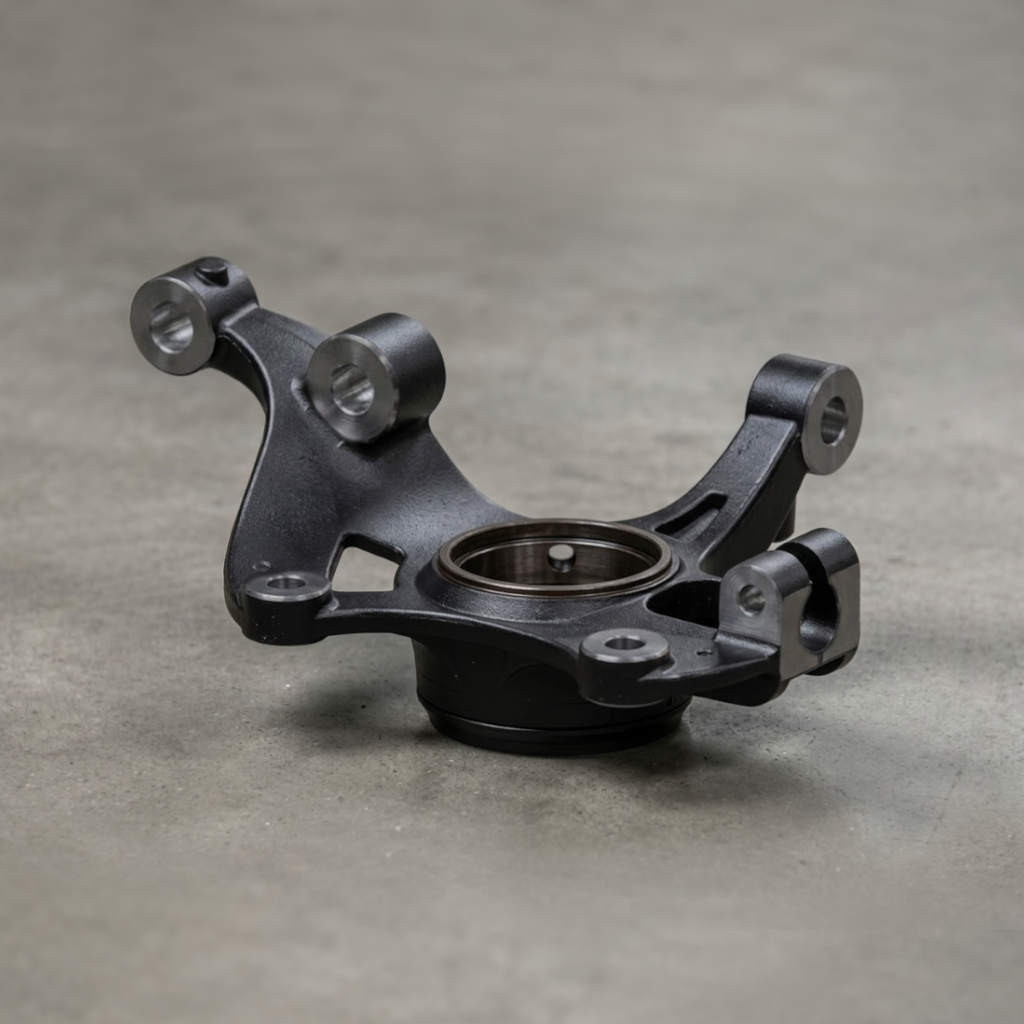
The Engineering Question
Can a steering knuckle be significantly lightened without compromising its structural integrity?
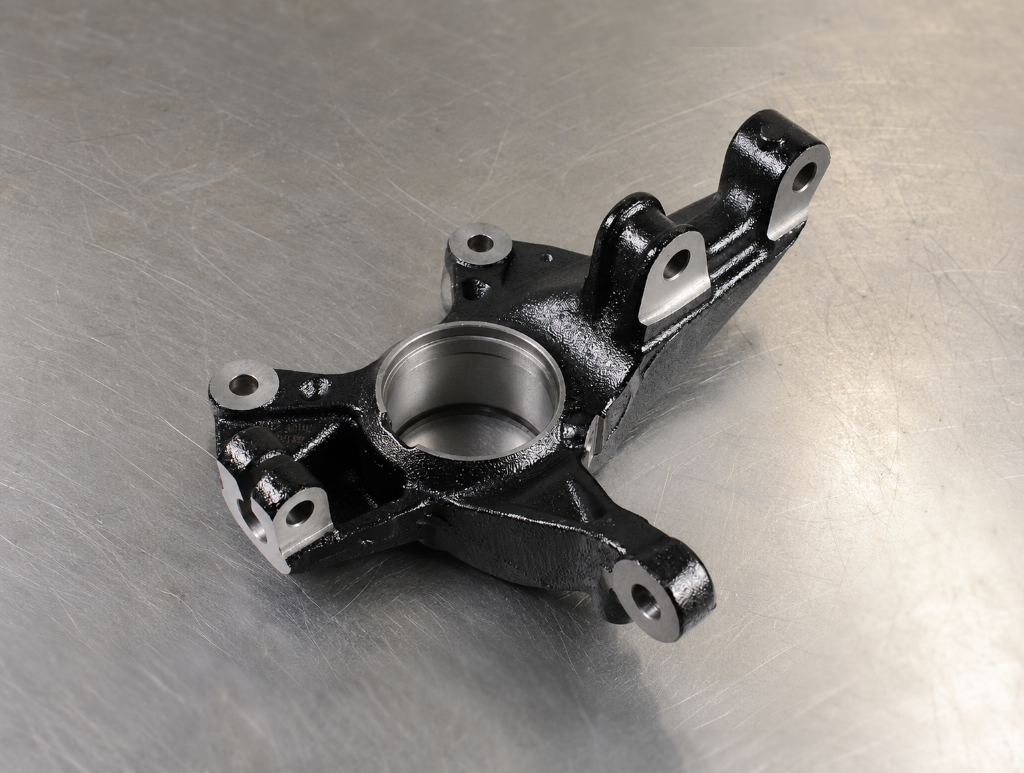
The original steel steering knuckle weighed 6.3 kg, contributing heavily to the vehicle’s unsprung mass. The goal was to redesign it in order to minimize weight without compromising its structural integrity, reducing costs and considering the environmental impacts of this mass reduction.
Understanding the Existing Component
Capturing the existing geometry for parametric redesign.
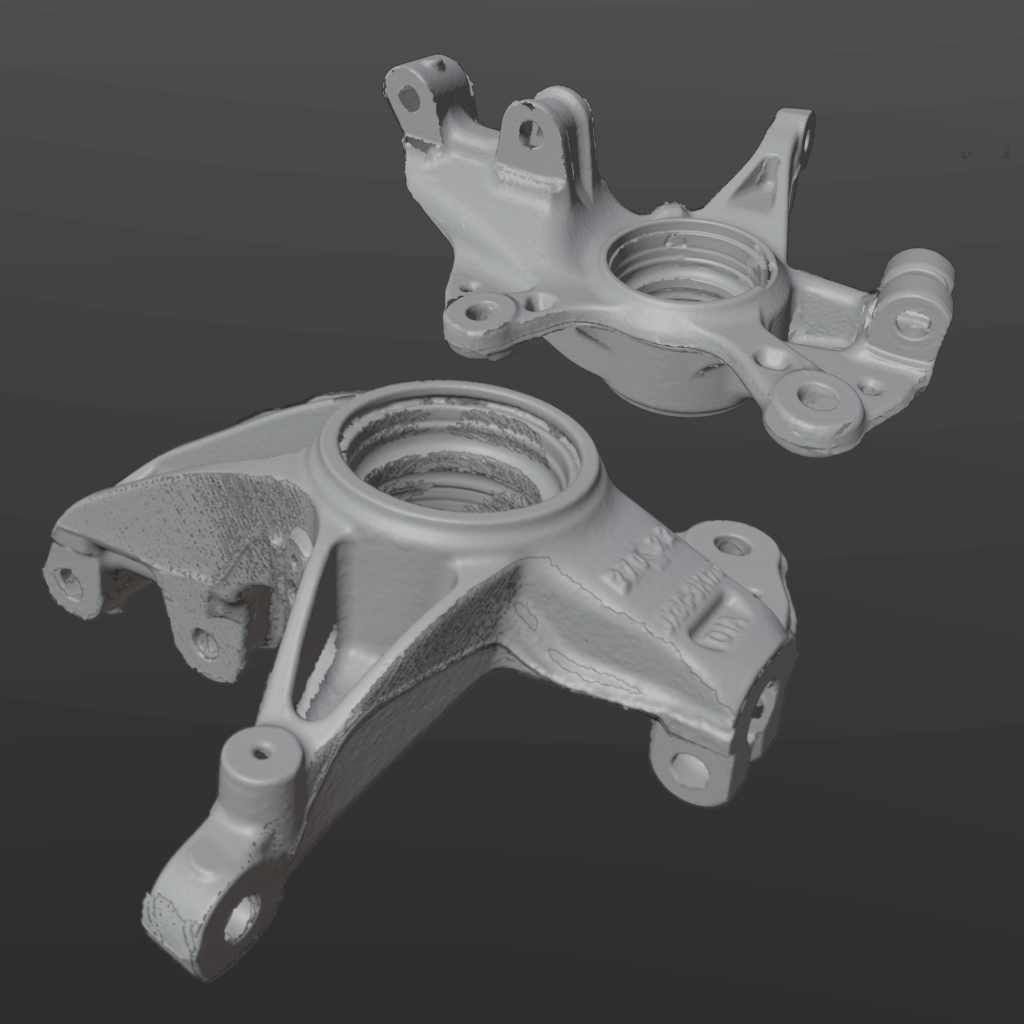
3D Scan & Mesh
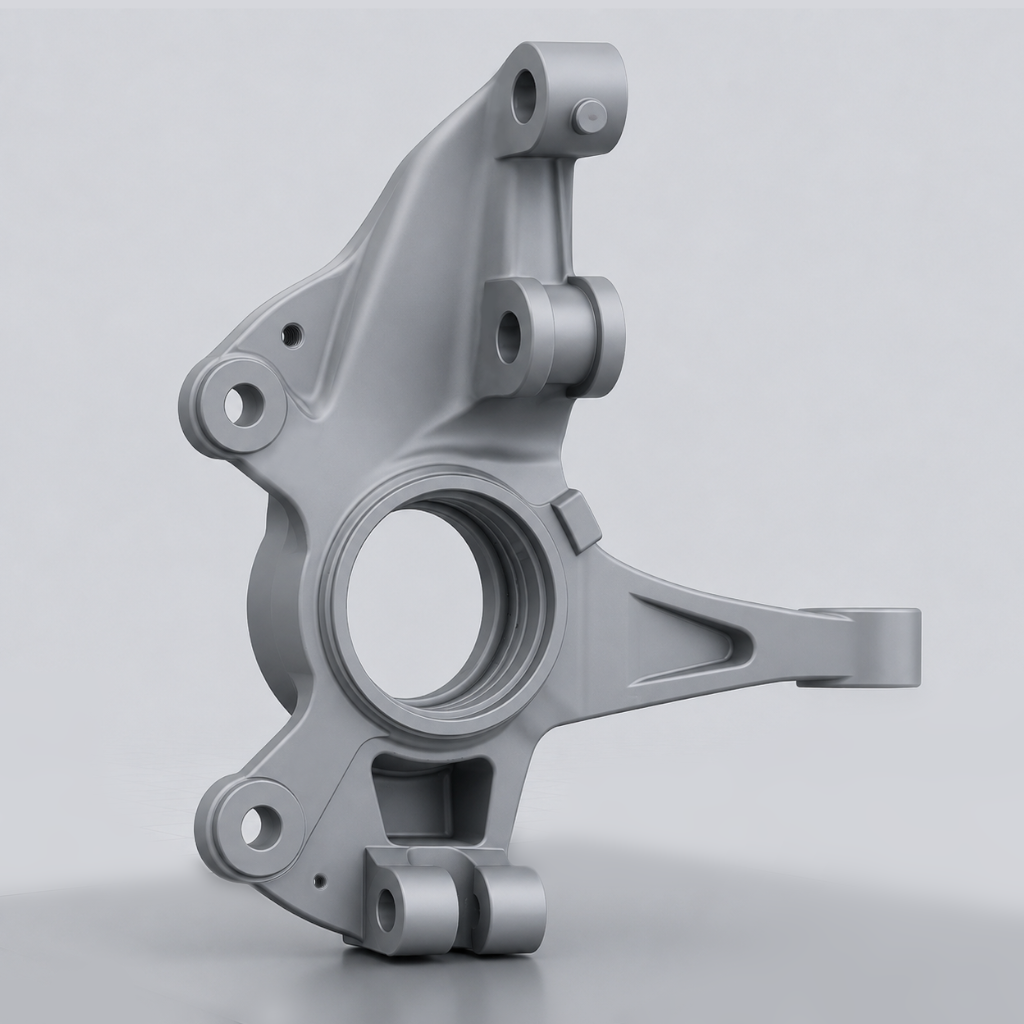
Parametric CAD
Verifying the Initial Hypothesis
The original design was analyzed to validate the project hypothesis.
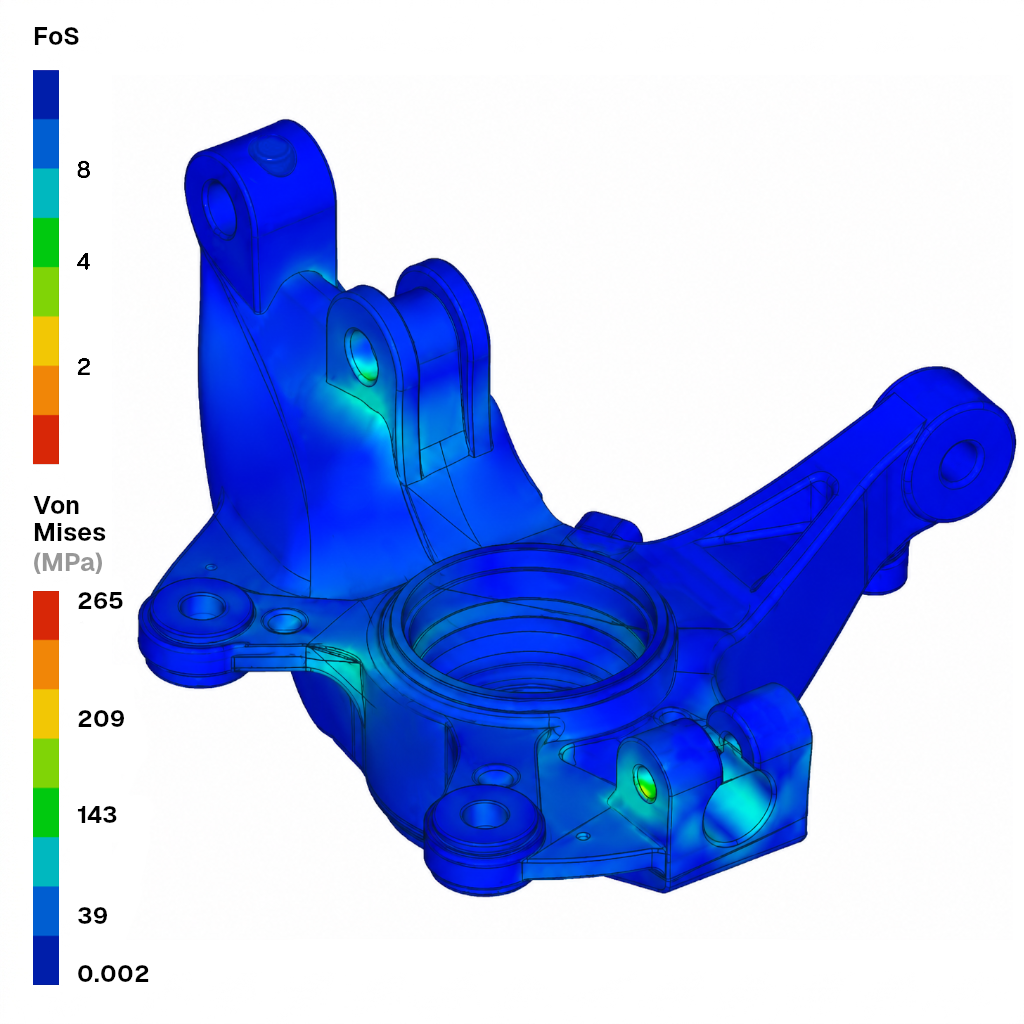
A combined load case (maximum braking, maximum cornering, and maximum pothole impact) was simulated on the original steering knuckle to establish a baseline. The analysis confirmed that the original component contained regions with little to no stress, validating the hypothesis that the part was over-engineered.
Concept Development
Optimization alone was not enough.
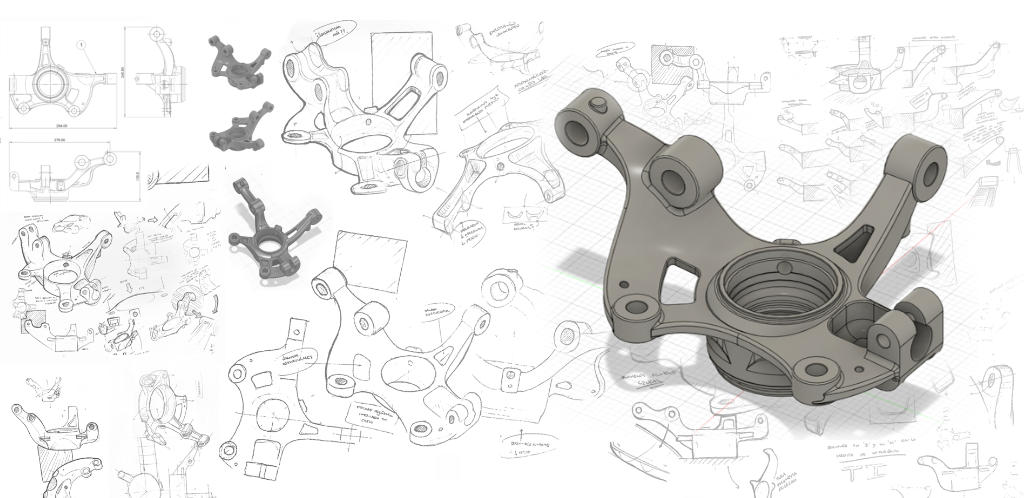
The redesign combined engineering analysis with concept exploration. The visual and structural language of the component was intentionally redesigned, exploring alternative ideas and aesthetics rather than relying solely on raw topology optimization.
CAD Redesign
Transforming the concept into a manufacturable CAD model.
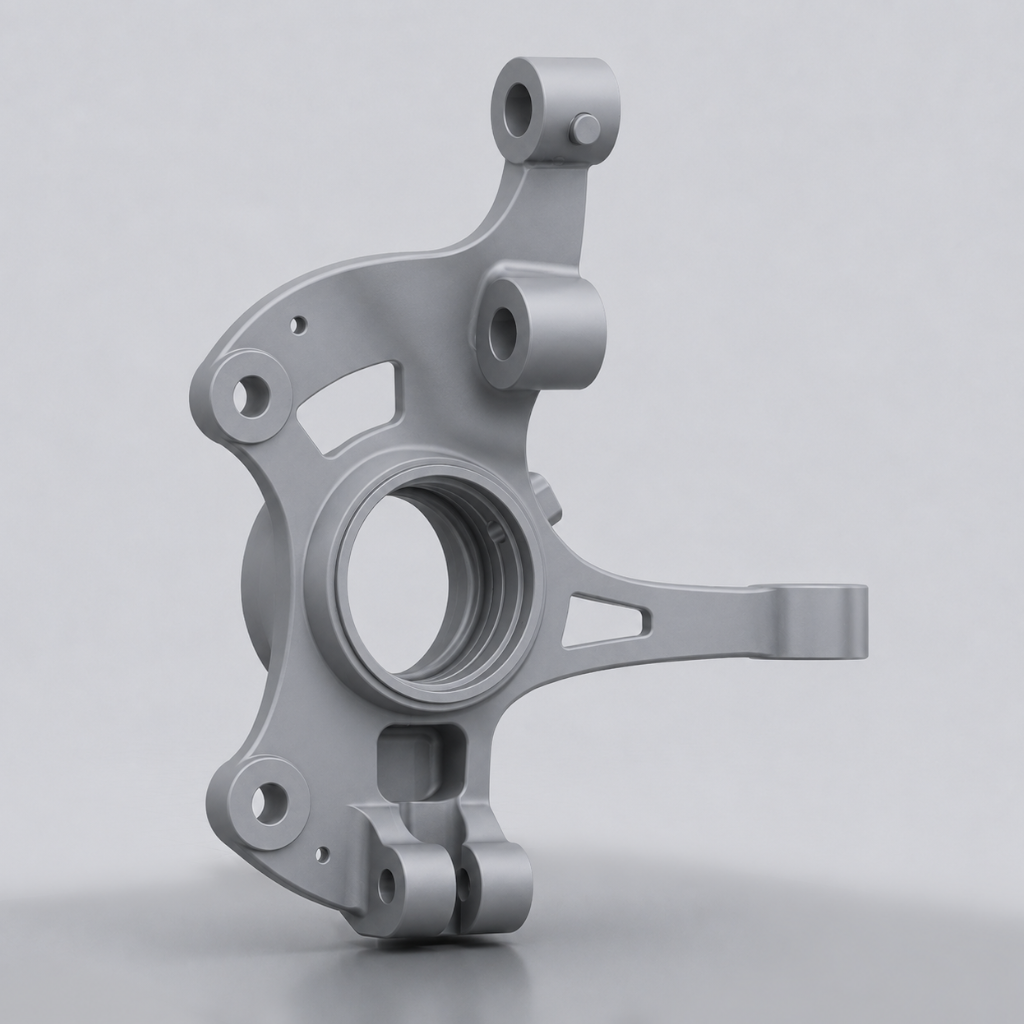
Preserving functional interfaces was critical. The optimized geometry was constructed using parametric modelling, ensuring that manufacturing considerations were met and the new design language was maintained.
 Final Redesign CAD Original Reconstruction
 Final Structural Validation
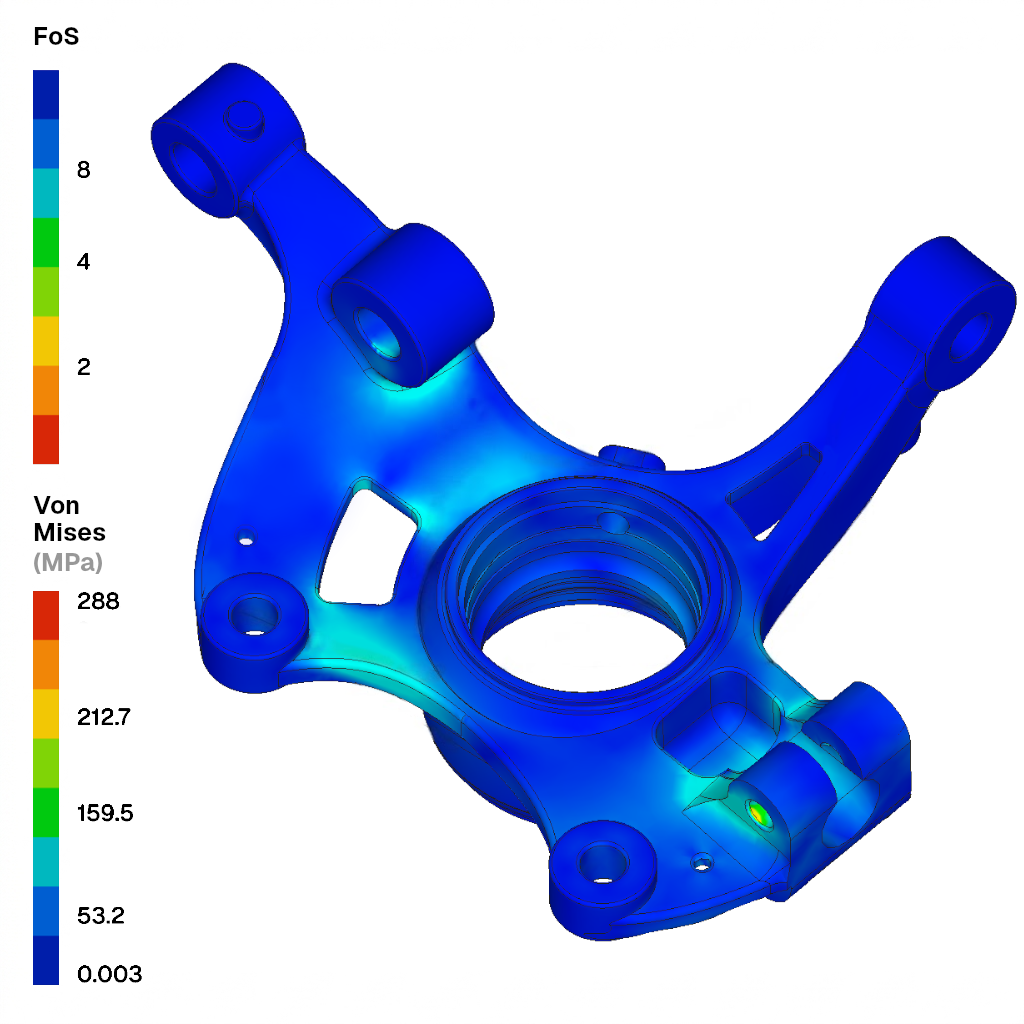
The redesigned component was validated using the same loading conditions.
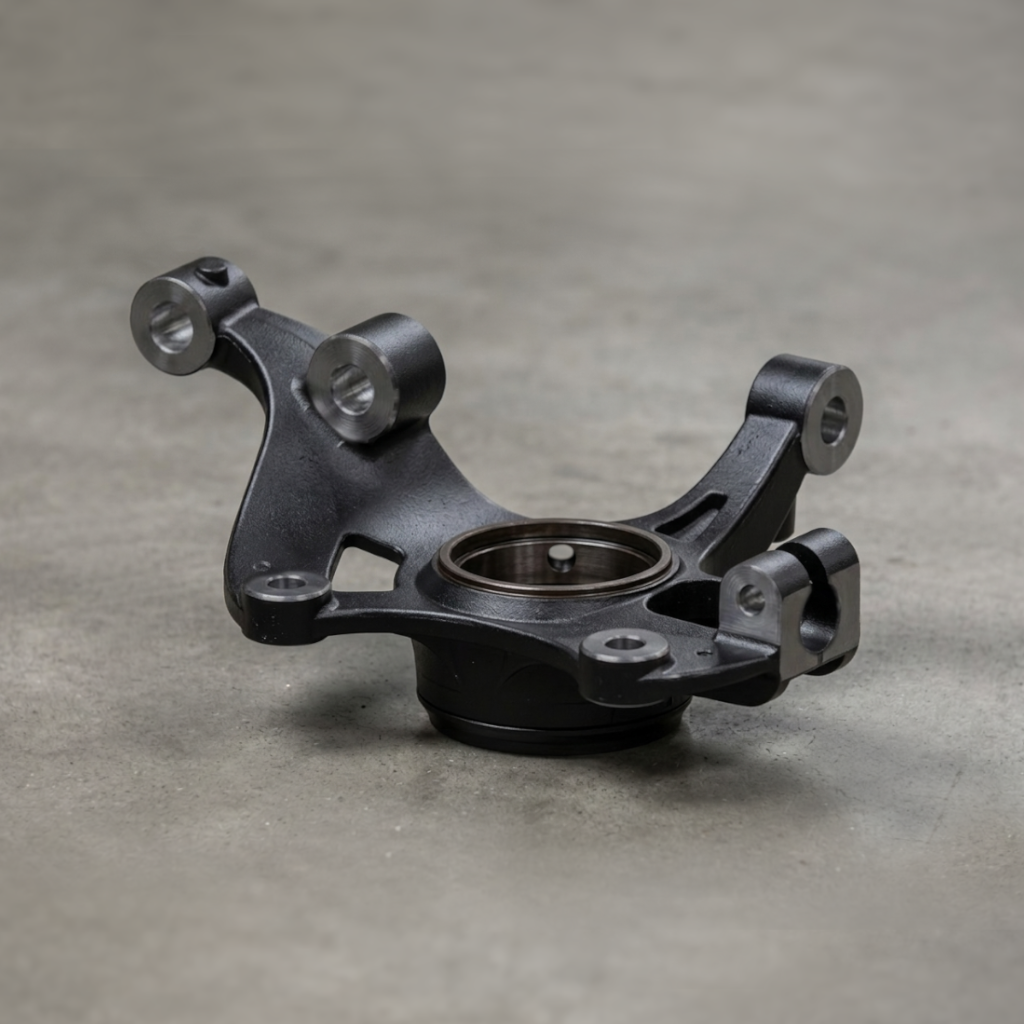
Structural performance was maintained. The safety factor remained well above 2.0 under identical combined load cases, whilst achieving a 33.3% mass reduction.
Final Design
A lighter, optimized steering knuckle.
Engineering Results
Key Conclusions.
33.3%
Mass Reduction
6.34.2kg
Final Weight
>2
Safety Factor
Engineering Reflections
Insights from the redesign process.
What worked well: The parametric reconstruction directly from the scan data was highly successful, preserving all functional interfaces accurately.
Biggest engineering challenge: Translating the raw, faceted output of the topology optimization into a smooth, manufacturable CAD model required extensive manual surfacing.
What would be improved: Establishing a more robust coordinate system and applying reference markers during the initial 3D scan would have streamlined the alignment process.
Main technical lessons learned: Optimization is only one part of the engineering process; geometric, aesthetic, and manufacturing constraints dictate the final visual language just as much as stress distribution.
Next Steps
Future development opportunities.
Transition to Aluminum and Bolted Bearings
In contrast to the use of steel and press-fit bearings in the original Ford Focus steering knuckle, the current trend in the automotive industry is shifting towards the use of aluminum alloys and bolted fastening systems. This solution allows for reducing the assembly’s mass, improving vehicle maintainability, and facilitating the replacement and interchangeability of components during their service life.
Generative Design and Additive Manufacturing
As a natural evolution, a methodology based on generative design could be developed to obtain even more efficient solutions. Metal additive manufacturing would allow materializing these complex geometries with a degree of freedom impossible to achieve through conventional processes.
Experimental Validation through Fatigue Testing
The next logical step after this project is to experimentally validate the component’s behavior. Although structural integrity has been verified through finite element simulation under the combined load case, physical validation through fatigue testing on a test bench is essential to evaluate the design’s durability and confirm its viability in real service conditions.
Executive Engineering Summary
Redesigning a lighter steering knuckle without compromising its structural integrity, manufacturability, or performance.
General Description
This Bachelor’s Thesis focused on the redesign of a 2021 Ford Focus Active front steering knuckle through reverse engineering, topology optimization, and CAD-assisted product development.
The goal was not only to reduce unsprung mass but to develop a manufacturable engineering solution that balanced structural behavior, sustainability criteria, and product design.
Engineering Decisions
- Reverse Engineering: The original component’s geometry was digitized using 3D scanning and reconstructed as a fully parametric CAD model, preserving all functional interfaces and geometric constraints.
- Structural Analysis: Before proposing any redesign, the original knuckle was analyzed using Finite Element Analysis under a combined load case to identify over-engineered regions and validate the mass reduction hypothesis.
- Concept Development: Topology optimization was used as a design support tool, combined with a conceptual exploration process to develop a solution that improved both the structural behavior and the final geometry of the component.
- Design for Manufacturing: The optimization result was reconstructed as a manufacturable CAD model, considering manufacturability criteria, functional integration, and industrial viability.
Validation
The redesigned component was evaluated using the same combined load case applied to the original part, allowing a direct comparison of its structural behavior. Simulations using Finite Element Analysis (FEA) confirmed that the new design maintained a safety factor greater than 2 under the most demanding loading conditions.
Result
- Mass reduction of 33.3% (6.3 kg → 4.2 kg).
- Safety factor greater than 2 under critical loads.
- Estimated savings of 29 liters of fuel during the vehicle’s lifespan.
- Estimated reduction of 73.4 kg of CO₂ per vehicle, considering both manufacturing and the use phase.
- Thesis awarded with Honors (9.3/10).